By: [Jeff Sandoz, PhD]
Originally from South Louisiana. Former two-sport collegiate athlete (football and track), now a college professor in psychology and a licensed marriage and family therapist specializing in addiction. This blog explores the powerful connections between thoughts, emotions, behavior, and the world of sports psychology, especially as it intersects with addiction and recovery. Expect a new post each week in this series through the end of the year.
It’s October. The air has shifted cooler, and baseball fans everywhere are turning their attention to the World Series. For many, this time of year brings joy, nostalgia, and championship dreams. For me, it brings something else too—something older and more deeply rooted.
Fear.
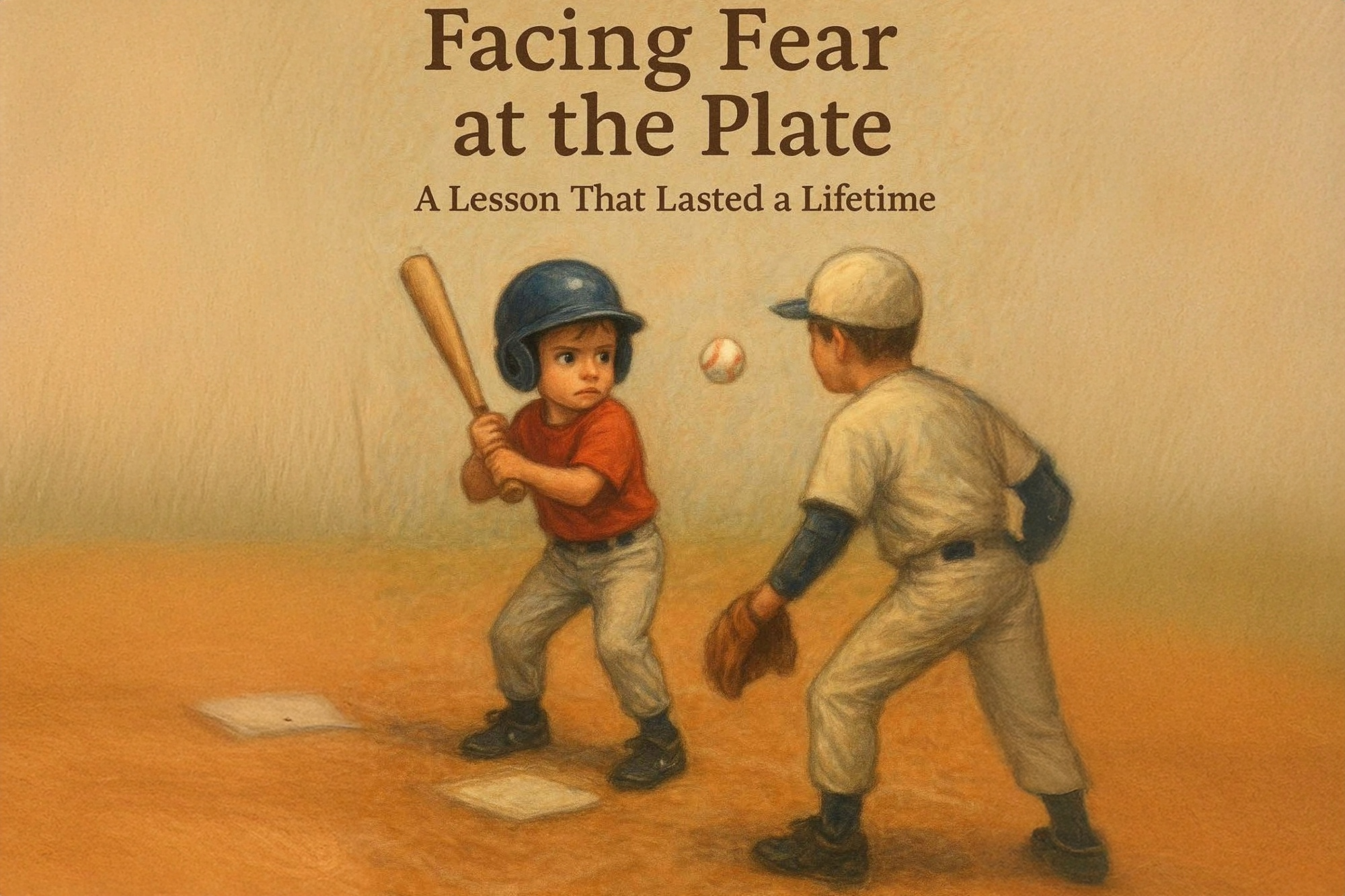
You see, when I think of baseball, I don’t think of home runs or walk-offs. I think of standing at the plate, knees shaking, heart racing, and eyes locked not on the ball, but on the very real possibility that it might strike me—again.
I was eleven, skinny as a rail, with nothing but bones to absorb the shock of a fastball. I played four seasons of youth baseball and managed exactly one hit. One. My teammates were polite enough, but confused—especially since my older brother, who would later go on to play for LSU, had a swing that made coaches swoon. They asked what went wrong with me.
All I could do was shrug.
But deep inside, I knew. I wasn’t bad at baseball because I lacked talent. I was bad because I was scared. Every season, I got hit. Every time, it hurt. But worse than the bruises was the embarrassment. Shedding tears in front of a crowd. Hearing the snickers. The word crybaby searing itself into my memory. The humiliation haunted me far more than any fastball ever could.
So, when Pony League rolled around—a step up in size, competition, and pressure—I was on edge. And then came the first practice, with a coach I’d never played for but had seen from across the field for years. He arrived early, ran warmups, and began batting practice.
And then he called my name to bat first.
Terror. That’s the only word I have for it. I walked to the plate feeling like a prisoner heading to execution. I flinched. I ducked. I backed out of the box as if the bat couldn’t protect me. After two pitches, he quietly moved me to the end of the lineup. At first, I took it as a slight.
But it wasn’t.
It was understanding.
My heart sank. Another round of failure?
Not this time.
He walked off the mound, put his arm around my shoulder, and together we strolled down the third base line. His voice was soft, just for me to hear.
“I’ve watched you play for four years,” he said. “And I know your problem. You’re afraid of being hit by the ball.”
I nodded. Finally, someone had said it out loud. My secret wasn’t a secret anymore—and strangely, it was a relief.
He promised to keep it just between us. Then he gave me a mission: “Today, you’re going to swing at everything I throw. Don’t worry about where it lands. Just connect.”
He started with gentle underhand tosses. Then gradually, the pitches came faster. Overhand. With more zip. I swung—and I hit. Again and again. Four balls flew over the fence in a row. I started to feel something I hadn’t felt in years.
Confidence.
He explained the logic: “The bat is your protector. If you swing it, the ball can’t hurt you.”
To my 11-year-old mind, it was revolutionary. Genius. This man was Einstein in cleats.
After my stint at batting practices he sent my teammate on a lap run around the baseball diamond and He told me about Ted Williams, the last major leaguer to hit over .400, and how he focused so intently that he would visualize the stitches on the ball. Mentally, he would hit the ball AND get on base safely.
By the end of that season, my batting average was .293. The next season? Confidence spread and my batting average was an incredible .720. That means that I would get a hit nearly three out of every four times at bat.
But more important than the numbers was the shift in my mindset. A coach saw my fear. He didn’t mock it. He didn’t shame me. He didn’t try to toughen me up with barked orders.
He understood.
And with compassion, patience, and belief, he redirected me—away from fear and toward trust. In myself. In the process. In the bat.
Over sixty years have passed since that summer, but I still carry that lesson with me. It reminds me—whether I’m counseling a client through addiction, teaching future therapists, or reflecting on my own journey—that fear is rarely the enemy. It’s the silence around it that does the damage.
So thank you, Coach Dave. Your kindness changed the trajectory of my life. You taught an 11-year-old boy that courage isn’t the absence of fear—it’s swinging anyway.
Leave a Reply